If you stripped away everything else, what's left?
You design systems. You plan microcycles. You study video. You manage loads. It's serious work, and it's necessary. But none of it is the end. It's the means.
Your role, at bottom, is just one: get the best out of every athlete in front of you. Not the average athlete. Not the ideal profile the textbooks describe. This one, with this fear, this motivation, this way of hearing an instruction.
Everything else you do, the tactics, the physical work, the technique, only reaches the pitch through him. And he's not an equation. He's a person.
Everyone sees the game. Few see the other one.
It doesn't show up in the stats. It doesn't air on television. But it decides results, contracts and careers: it's played out in each athlete's head, and in how each one relates to himself, to teammates, to you.
Technical · Physical · Tactical
Measurable, trainable, visible to the naked eye, and because of that the easiest thing to sell and to buy.
Behavioral · Emotional
Invisible, but decisive. A technically perfect athlete who's emotionally lost doesn't perform. An athlete who's read well and led well outperforms his own technical ceiling.
What is this athlete like?
Why does this athlete behave this way?
Learn to read. And hold the tool that sustains it.
One teaches you the method. The other puts it to work every week with your own squad. You can start with either.
The Coach's Code
Five modules, real dressing-room cases and difficult-conversation simulations. You leave with three or four tools to use in the next session.
See the programme and plans →The supporting tool
Your squad's profiles, weekly radar, drop alerts and matchday briefing. What you open on Monday and check before every conversation.
See inside and the plans →It's not a reserved seat. It belongs to whoever grabs it first.
This knowledge doesn't belong to one specific role. It belongs to whoever, within the coaching staff, decides to master it first: the assistant coach, the fitness coach, the goalkeeping coach, the video analyst.
Whoever has the people
There's always someone on the coaching staff closer to the people: whoever follows the injured player, talks to whoever isn't playing, has the conversation the head coach doesn't have time for. They're already using this information, just by intuition.
What sets you apart
There are hundreds of professionals with the same degree and the same UEFA license level. Mastering human behavior applied to football sets you apart from almost everyone who doesn't have it in hand yet.
The path of least resistance
An outside psychologist creates a new voice in the locker room. Someone already inside the coaching staff who masters this gives the head coach readings he didn't have, in the language that's already the team's own.
Technical staffs we have worked with.








And 5 more professional clubs across Portugal's top three divisions.
It is essential to know each player's individuality and to have one-to-one conversations to understand their expectations and their profile. He divides those profiles into colours, blues, reds, yellows and greens, and from there you can understand how to motivate each one better, because some players respond more to closeness and others to distance.Vítor Campelos, head coach, interviewed by Flashscore
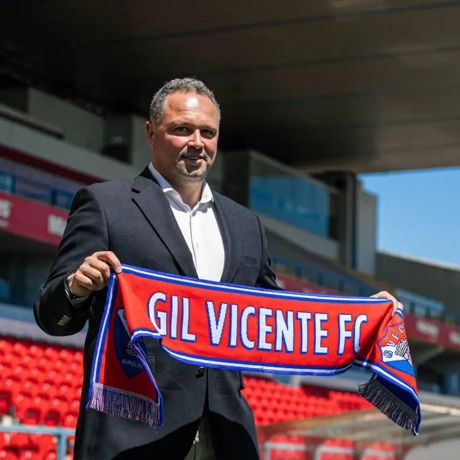
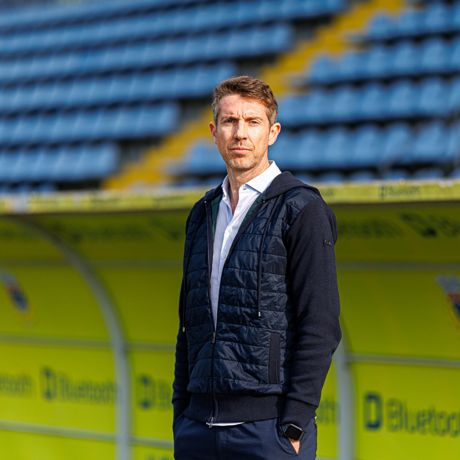
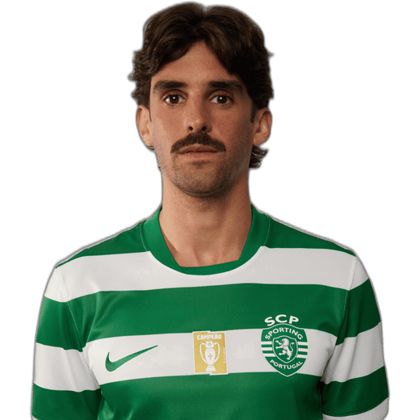
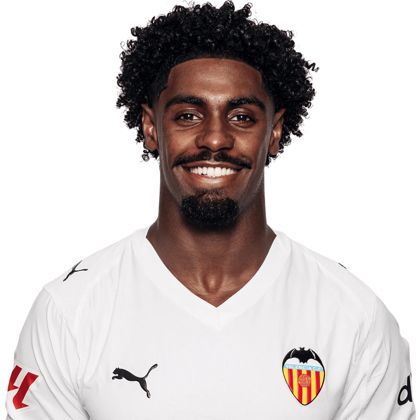
Players who helped build this tool.
Professional athletes we worked with directly, whose day-to-day helped test and sharpen every profile reading.







The project, told by those who saw it from outside.
Reading on profiles, communication and leadership.
The Athlete's Behavioral Code: the Invisible Layer That Decides Performance
Why two athletes with the same talent perform differently, and what that has to do with profile, emotional intelligence and learning style.
Read article → Communication & LeadershipCommunication Adapted to Profiles: the Coach's Practical Guide to Reaching Every Player
The same sentence works with some players and shuts others down. A practical guide to adapting your communication without losing your identity as a coach.
Read article → Leadership & Team CultureLeadership and Influence in the Locker Room: How Coaches and Clubs Build Strong Groups
The most talented team doesn't always win. The role of influence-based leadership, hierarchies and conflict management in collective performance.
Read article →The Coach's Code starts here.
Module by module. Athlete by athlete. Conversation by conversation. Book a demo with no commitment, with real examples of profiles and of the weekly radar.